
.webp)


Feb 17
Creativity as a relentlessly optimistic practice
Preface: the 99%
Tuesday morning, Heights internal design review time.My design right hand, Petar, shares a link to the latest brand directions for our latest client, and by the time I jump in he's already explored about 12 different design avenues.To show me, he narrowed it down to a few strongest ones.When we speak to the client later that day, we'll be down to 3, and we'll ask them to choose only 1 to develop further. That means 90+ percent of the creative output of this project will never see the light of day outside our internal Figma files.
That one surviving direction goes through rounds of refinement, feedback and iteration. Hundreds of small decisions, explorations, dead ends, U-turns – all compressed into a single output that (if we've done our job) feels clean, obvious, almost inevitable.By the time the brand reaches its actual user, the ratio of what was imagined to what was shipped is something absurd.
Nobody looking at the finished thing would guess the sheer volume of creative output that went into getting there.
This explosive overabundance of ideas is the process itself
Although Petar shows me his strongest design options, I ask to see the ones he's already moved away from. Because there is no such thing as discarded work when it comes to design.
You can't get to the 1% without generating the other 99%, and there is no shortcut here.Every designer I work with knows this, and, honestly, one of the first things you learn (kind of painfully) is that your first idea is almost never the one, and and likely, neither, will your fifth.
So you learn to hold things loosely. You learn to invest fully in a direction while knowing you might well discard it later on. You learn to trust that if you keep pushing, exploring, generating more than you'll ever use, something will emerge that is genuinely good.
I think about this a lot: it means that creativity is fundamentally an optimistic practice.Because most people would collapse when 99% of their effort ends up discarded. Unless they truly believe in the cause.
We keep running on a stubborn trust that the process leads somewhere worth getting to, even when we can't see it yet.And, in the end, that trust is justified.
Sometimes a project stalls and you have to rethink the brief entirely. But more often than not, the designer who keeps going and is willing to re-imagine and iterate, ends up somewhere surprising and right.That's the whole bet.
Anyway, let me zoom out for a second
Heights is design agency that works with climate tech startups and scale-ups and impact-driven companies at large.Through a relentlessly optimistic creative practice, we help them function like the serious businesses they are, so they can reach more users, attract investment and scale their impact.
I love this work.
And I've noticed something about the people I enjoy working with most: they have this same energy. They leave shallow hopes aside, and instead embrace the practical, stubborn optimism that takes courage and effort every single day.And in climate tech, that is most of the work.
They know the climate crisis is enormous and real and serious, but they've chosen to focus their energy on building something rather than listing everything that's going wrong.I think that's the only place to be if you actually care about producing anything of value.
Drawing conclusions: the 1%
Here's where the parallel really clicks for me: the climate crisis is, among many other things, a massive creative challenge, maybe the biggest one we’ve ever had to tackle.
We need new products, new systems, new ways for people to interact with energy, food, transport, materials, supply chains. Everything.And those things will come from the same place every good design comes from: someone generating more ideas than will survive, holding them loosely, being willing to throw away the 99% that doesn't work, and trusting that the 1% is worth the effort.You could call that naive, but it’s just how new, good things get made.
And of course I sometimes think about the creative directions we leave behind.
Twelve avenues explored in a couple of days, most of which no one outside our team will ever see. Multiply that across every project, every week, every studio and workshop and lab doing creative work on problems that matter. The sheer volume of ideas we create and don’t show gets staggering, and is kind of beautiful.
The process of generating it is the only mechanism we have for producing positive solutions to really tough problems.I've spent enough time reviewing design directions that go in the archive to know that the willingness to keep going is the point.
The alternative is staring at a blank page or giving up after a few attempts. And, if you ask me, that's never produced anything worthwhile.So I choose relentless optimism, in our design practice, with our clients, and in the way I show up everywhere else too.
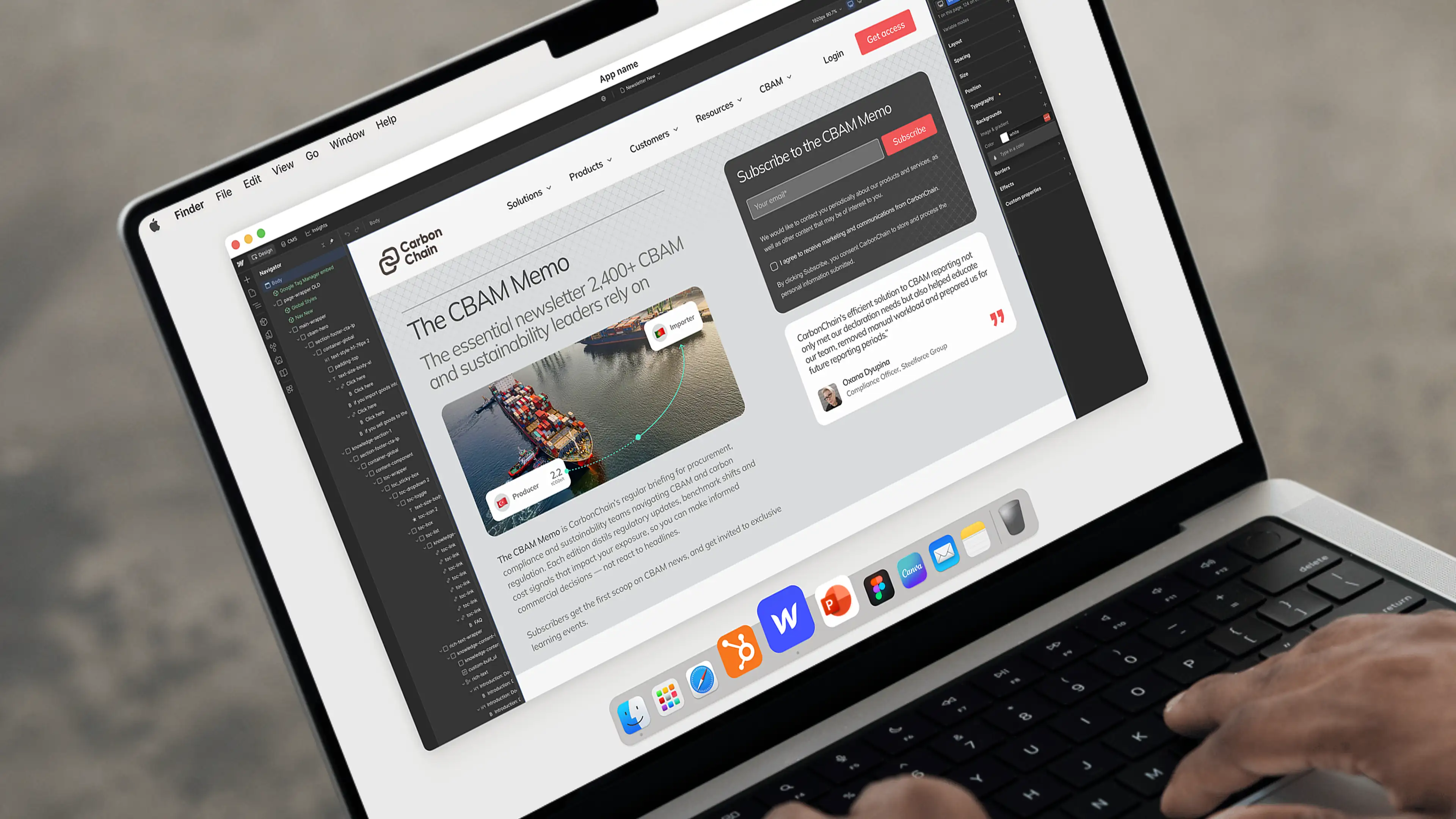
CarbonChain
Supply chain carbon emissions platform helping companies measure, manage and report on their climate impact
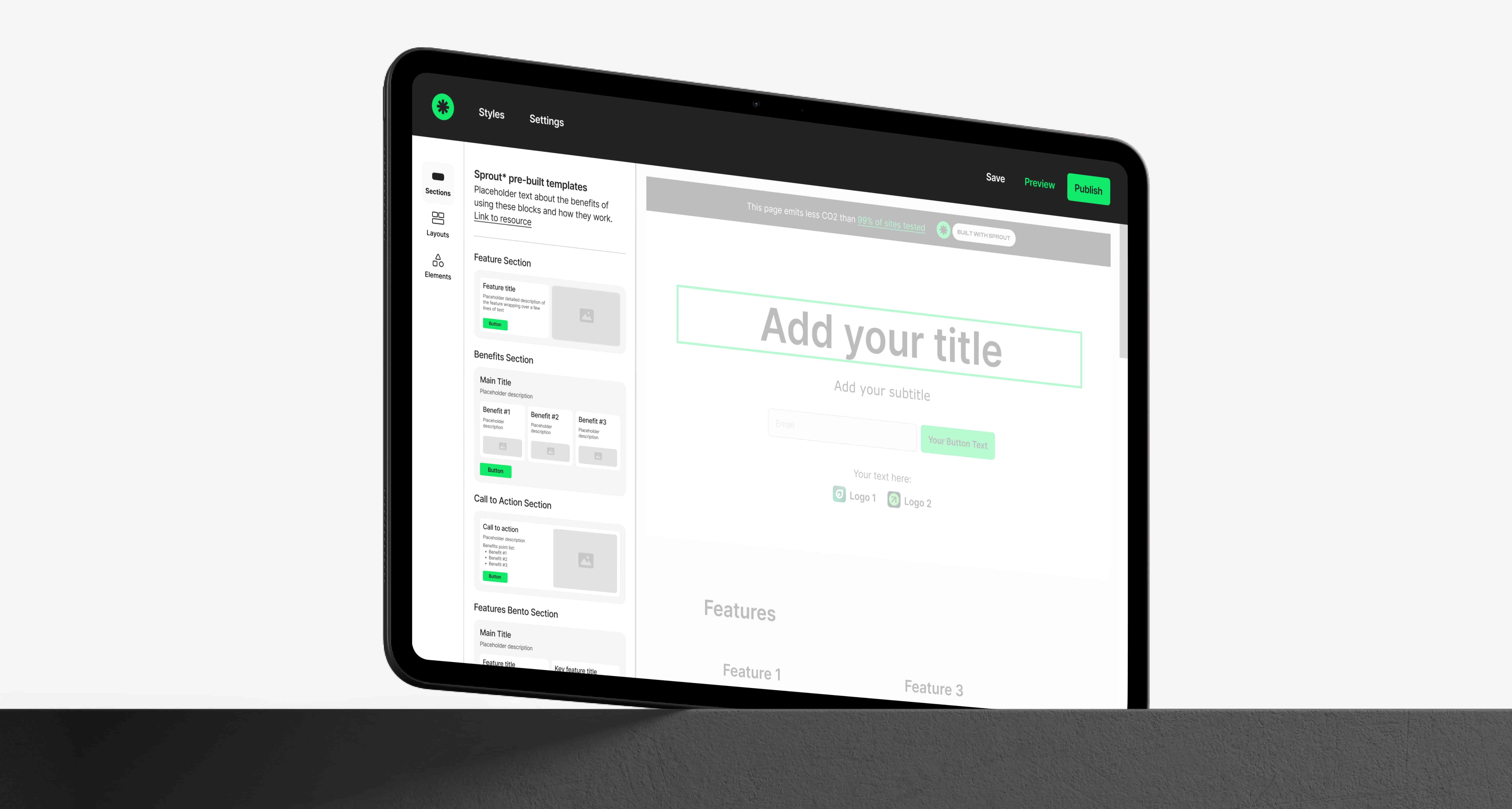
Sprout*
No-code website builder helping purpose-driven organisations create beautiful sites that emit up to 99% less CO2